


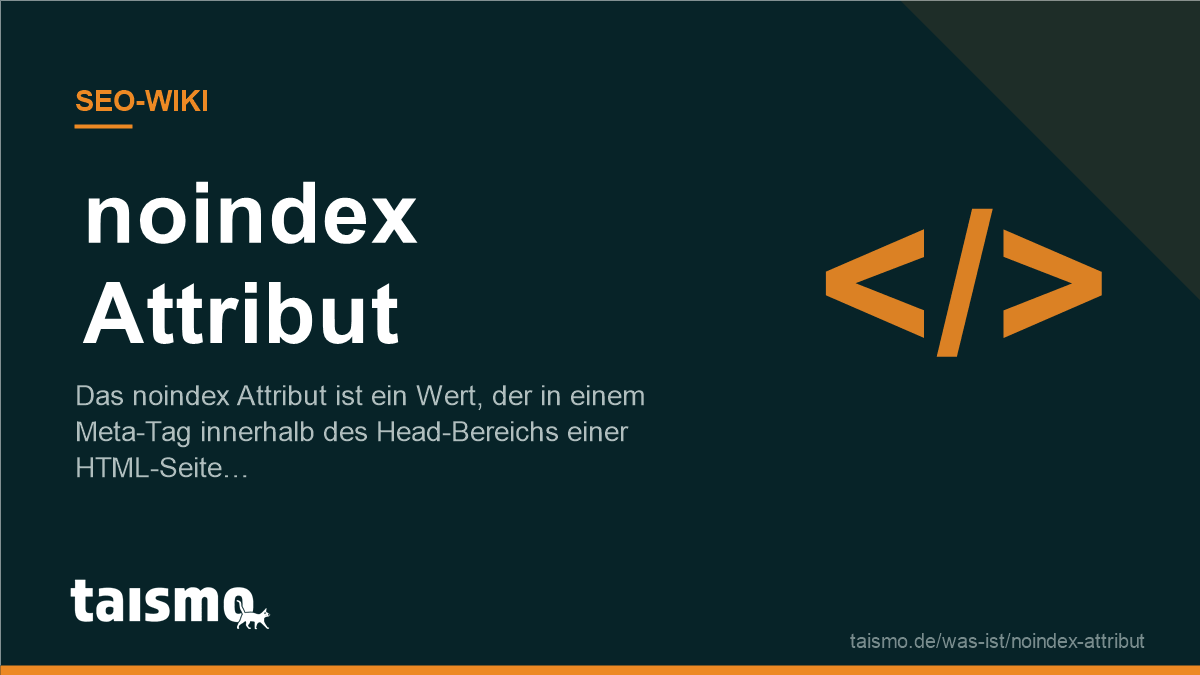
What is the noindex attribute?
The noindex attribute is a value placed in a meta tag inside the head area of an HTML page. It instructs search engine crawlers not to take the page into their index, which means it does not show up in the search results. That is useful when you want to keep certain pages away from search engines, for example archive pages, print versions of pages or temporary pages.
What does the nofollow attribute mean?
The nofollow attribute is a different value, and it is used specifically for links. When you add it to a link, it tells search engine bots not to follow that link and not to pass any PageRank or link juice to the linked page. That matters in particular when links point to unreliable websites, or to pages the site owner does not want to give a “recommendation” to, advertising links being the typical case.
How do I set the attributes in HTML?
To set the noindex attribute, add the following meta tag to the head area of your HTML page:
<meta name="robots" content="noindex">For the nofollow attribute, the value is added straight to the link tag:
<a href="http://example.com" rel="nofollow">Link text</a>You can also use both attributes at the same time, by adding the value nofollow to the content attribute of the meta tag, or by giving both values in the rel attribute of a link.
What effects do the attributes have on SEO?
Using noindex and nofollow can have a considerable effect on search engine optimization (SEO). The noindex attribute keeps a page out of the search results, which can make sense to avoid duplicate content or to hide pages that are not relevant. The nofollow attribute, on the other hand, works on link authority: it stops link juice from being passed on, which carries weight with paid links or user generated content, where it helps you avoid a penalty from search engines. It is worth remembering that the same mechanism decides how much authority a backlink can pass to you.
Should you use both attributes at once?
Using noindex and nofollow together is possible and can make sense in certain situations. If a page should not be indexed and the links on it should not be followed by search engines either, then combining both attributes is the way to go. Do it deliberately, though, because it can cost you visibility and link authority. Check carefully whether you really need the attributes and what they will do before you decide to use them. Which of your pages belong in the index and which do not is one of the questions we work through in an SEO audit.
Welt der SEO lernen?