


What is the Knowledge Graph?
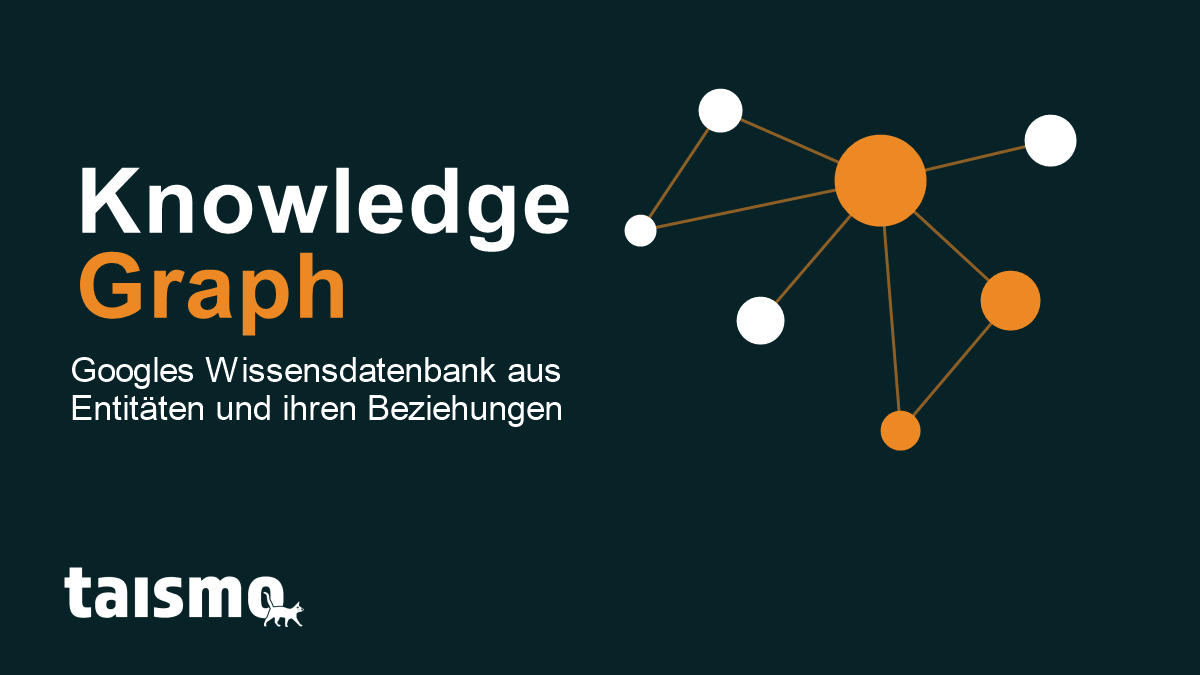
The Knowledge Graph is Google’s knowledge base, which stores real world things (people, places, organizations and concepts) as entities and links them through their relations. Google uses this knowledge graph to understand the meaning behind a search query, to fill Knowledge Panels with facts and to back up AI answers such as AI Overviews. Instead of matching plain character strings, Google recognizes which real object is meant. Google calls that principle “things, not strings”.
Google launched the Knowledge Graph on May 16, 2012. It turned search from a pure text match into an understanding of entities. If you ask “How tall is the Eiffel Tower?”, Google hands you the answer directly, because it knows the Eiffel Tower as an entity with the property “height: 330 meters” and not as a string of letters.
The term at a glance
| Attribute | Detail |
|---|---|
| Type | Semantic knowledge base (entity graph) |
| Operator | |
| Launch | May 16, 2012 |
| Core principle | “things, not strings”, meaning things instead of character strings |
| Data sources | Wikipedia, Wikidata, Google Business Profile, structured data and the open web, among others |
| Scale | according to Google around 500 billion facts about 5 billion entities (as of 2020) |
| Visible output | Knowledge Panel, AI Overviews, enriched search results |
| Related terms | entity, structured data, Knowledge Panel, Knowledge Vault |
What is the Google Knowledge Graph?
The Google Knowledge Graph is how the idea of a knowledge graph is put to work inside the Google ecosystem. At launch, Google described it as a database holding 500 million objects and more than 3.5 billion facts about the relations between those objects. Every entity, whether a person, a city, a company or a movie, receives a unique machine ID plus a set of attributes and connections.
The word “graph” comes from computer science: a graph consists of nodes (the entities) and edges (the relations). The director Christopher Nolan is one node, the movie “Inception” is another, and the edge between the two carries the relation “directed”. Exactly this web of facts is what makes search interpretable for Google.
How does the Knowledge Graph work and where does the data come from?
The Knowledge Graph works by collecting facts from many sources, condensing them into entities and connecting them through relations. At launch, the graph drew above all on Freebase, an open knowledge base that Google took over in 2010 with the acquisition of Metaweb, and on Wikipedia and the CIA World Factbook.
Freebase was shut down in 2014 and the data was migrated to Wikidata by 2016. Today the most important sources of the Knowledge Graph are:
- Wikipedia and Wikidata: the structured base of facts for many well known entities.
- Structured data on websites: structured data following schema.org, usually in the JSON-LD format, hands Google machine readable facts straight from the source.
- Google Business Profile: the central source for company and location entities.
- The open web: matching statements across many trustworthy sites confirm a fact.
Google stated that by 2020 the Knowledge Graph had grown to around 500 billion facts about 5 billion entities. Every entity carries a unique identifier (machine ID) so that Google reliably keeps “Mercury” the planet, the chemical element and the Roman god apart. Through the Knowledge Graph Search API, developers can query these entities together with type and description.
What is a Knowledge Panel?
A Knowledge Panel is the information box that Google fills from the Knowledge Graph and shows in the search results. On desktop it appears to the right of the results, on a smartphone at the top. When you search for a well known person, a company or a place, the panel bundles the most important facts: photo, short description, year founded, address, social media profiles and related entities.
The difference matters: the Knowledge Graph is the database in the background, the Knowledge Panel is its visible output on the search engine results page (SERP). There is no panel without a matching entity in the graph. Anyone who owns a panel can claim it with Google after an identity check and suggest corrections.
Knowledge Graph vs. Knowledge Vault: what is the difference?
Knowledge Graph and Knowledge Vault differ in the way they gather facts. The Knowledge Graph leans heavily on curated, structured sources such as Wikidata and vetted databases. The Knowledge Vault was a research project that Google presented in 2014 to extract facts from the entire web fully automatically.
- Knowledge Graph: builds on reliable, in part manually maintained sources. The facts are curated and fairly robust.
- Knowledge Vault: used machine learning to pull facts out of unstructured web text and gave every fact a confidence value. With that method the research team collected around 1.6 billion facts.
The Knowledge Vault was never shipped as a product of its own. Its idea, winning facts from the web automatically and weighting them with confidence values, has fed into the further development of Google’s knowledge systems. In short: the Knowledge Graph is the productive knowledge base, the Knowledge Vault was the research approach for filling it automatically.
How do you get into the Knowledge Graph?
You get into the Knowledge Graph by convincing Google that you are a clearly identifiable, well documented entity. An entry cannot be bought, it can only be earned through consistent signals. Five levers decide it:
- Mark up the entity with structured data: an
OrganizationorPersonschema withsameAsreferences to your profiles bundles the identity for Google. - Aim for a Wikipedia or Wikidata entry: both are central trust sources of the graph, and a Wikidata item is often the first anchor point.
- Maintain the Google Business Profile: for companies and local branches this is the direct line into the Knowledge Graph.
- Keep the details consistent: name, address and core facts have to be identical across your website, social media and directories.
- Build authoritative mentions: mentions and links from trustworthy sites confirm the entity.
This entity work is a fixed part of modern SEO services: whoever is cleanly defined as an entity has the best chances of a Knowledge Panel of their own and of being mentioned in AI answers.
What does the Knowledge Graph mean for SEO and GEO?
The Knowledge Graph moves SEO from keywords toward entities. Google increasingly ranks and interprets content by which real world things it describes and how those things relate to each other. Entity based SEO therefore aims to anchor your own brand, its people and its topics as clearly recognizable entities in the graph.
For Generative Engine Optimization (GEO) the Knowledge Graph is even more fundamental. AI systems and AI Overviews base their answers on verified entities and facts in order to avoid hallucinations. Whoever stands in the Knowledge Graph as a solid entity is more likely to be picked up as a source by AI answers. Structured data and a clean entity profile are therefore the bridge between classic search and AI visibility.
Frequently asked questions about the Knowledge Graph
Is the Knowledge Graph the same thing as the Knowledge Panel?
No. The Knowledge Graph is Google’s knowledge base in the background, the Knowledge Panel is the visible information box that Google builds from that database in the search results.
Can I buy an entry in the Knowledge Graph?
No. An entry cannot be bought. Google only takes entities in when there are enough consistent and trustworthy signals, for example structured data, a Wikidata item and matching details across the web.
How long does it take to get into the Knowledge Graph?
It usually takes several weeks to several months. The time frame depends on how strong and how free of contradictions the entity signals are and how often Google reprocesses the sources involved.
Welt der SEO lernen?