



What is the Knowledge Graph?
The Knowledge Graph is Google’s knowledge database, which stores real-world entities (people, places, organizations, and concepts) and links them together based on their relationships. Google uses this Knowledge Graph to understand the meaning behind a search query, populate Knowledge Panels with facts, and validate AI-generated responses such as AI Overviews. Instead of simply matching strings of characters, Google can thus identify which real-world object is being referred to. Google calls this principle “things, not strings.”
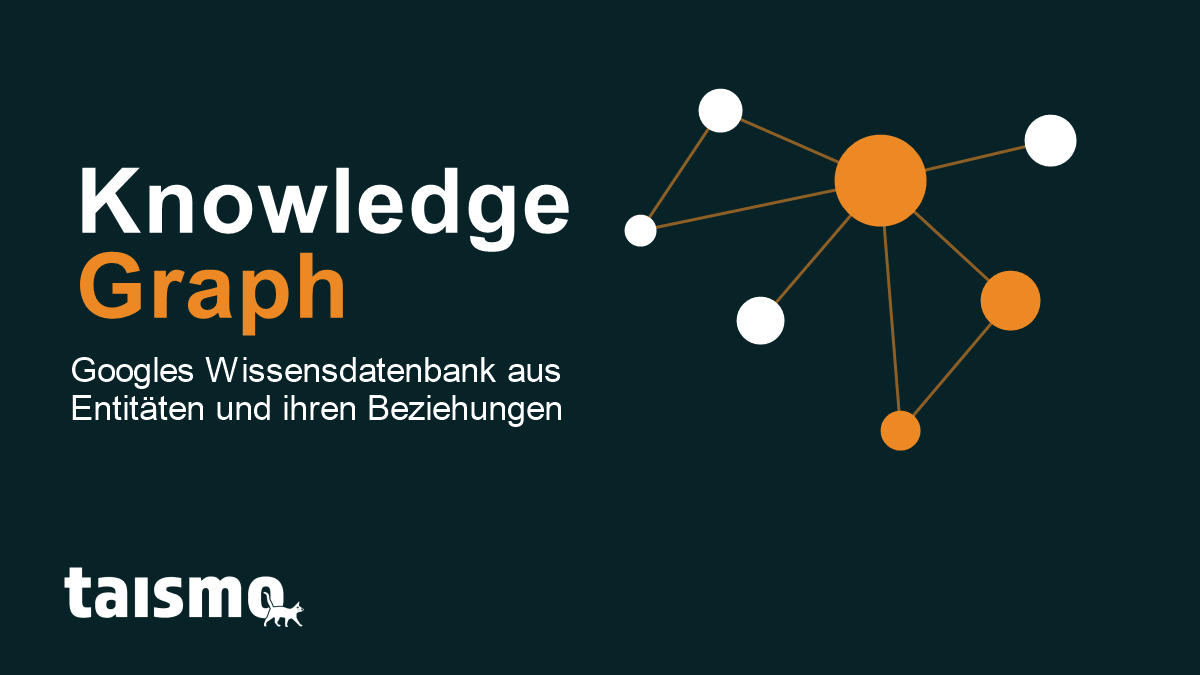
Google launched the Knowledge Graph on May 16, 2012. It transforms search from a simple text match into an understanding of entities. If you ask, “How tall is the Eiffel Tower?”, Google provides the answer directly because it recognizes the Eiffel Tower as an entity with the property “Height: 330 meters,” not as a string of characters.
Brief Overview of the Term
| Characteristic | Specification |
|---|---|
| Type | Semantic Knowledge Base (Entity Graph) |
| Operator | |
| Start | May 16, 2012 |
| Core Principle | "things, not strings" – things instead of strings |
| Data Sources | including Wikipedia, Wikidata, Google Business Profile, structured data, the open web, and others |
| Scope | According to Google, approximately 500 billion facts about 5 billion entities (as of 2020) |
| Visible Output | Knowledge Panel, AI Overviews, enriched search results |
| Related Terms | Entity, Structured Data, Knowledge Panel, Knowledge Vault |
What is the Google Knowledge Graph?
The Google Knowledge Graph is the concrete implementation of the knowledge graph within the Google ecosystem. When it was launched, Google described it as a database containing 500 million entities and over 3.5 billion facts about the relationships between those entities. Each entity—a person, a city, a company, a movie—is assigned a unique machine ID and a set of attributes and connections.
The term “graph” comes from computer science: A graph consists of nodes (the entities) and edges (the relationships). Director Christopher Nolan is one node, the movie “Inception” is another, and the edge between them represents the relationship “directed.” It is precisely this network of facts that makes the search interpretable for Google.
How does the Knowledge Graph work, and where does the data come from?
The Knowledge Graph works by having Google collect facts from many sources, consolidate them into entities, and link them through relationships. Initially, the graph drew primarily from Freebase, an open knowledge database that Google acquired in 2010 when it purchased Metaweb, as well as from Wikipedia and the CIA World Factbook.
Freebase was discontinued in 2014, and its data was migrated to Wikidata by 2016. Today, the Knowledge Graph’s most important sources include:
- Wikipedia and Wikidata: the structured fact base for many well-known entities.
- Structured data on websites: Structured data based on schema.org, usually in JSON-LD format, provides Google with machine-readable facts directly from the source.
- Google Business Profile: the central source for business and location entities.
- The open web: consistent information across many trustworthy sites confirms a fact.
Google stated that by 2020, the Knowledge Graph had grown to include approximately 500 billion facts about 5 billion entities. Each entity has a unique identifier (Machine ID) so that Google can reliably distinguish between “Mercury” the planet, the chemical element, and the Roman god. Developers can query these entities—including their type and description—using the Knowledge Graph Search API.
What is a Knowledge Panel?
A Knowledge Panel is the information box that Google populates using the Knowledge Graph and displays in search results. On a desktop, it appears to the right of the search results; on a smartphone, it appears at the top. When you search for a well-known person, a company, or a place, the panel compiles the most important facts: a photo, a brief description, the year it was founded, the address, social media profiles, and related entities.
The distinction is important: The Knowledge Graph is the database running in the background, while the Knowledge Panel is its visible representation on the search results page (SERP). There can be no panel without a corresponding entity in the Graph. Anyone who has their own panel can claim it after verifying their identity with Google and suggest corrections.
Knowledge Graph vs. Knowledge Vault: What's the Difference?
The Knowledge Graph and Knowledge Vault differ in the way they collect facts. The Knowledge Graph relies heavily on curated, structured sources such as Wikidata and verified databases. The Knowledge Vault was a research project that Google unveiled in 2014 to extract facts fully automatically from across the web.
- Knowledge Graph: relies on reliable sources, some of which are maintained manually. Facts are curated and relatively robust.
- Knowledge Vault: used machine learning to extract facts from unstructured web text and assigned a probability value to each fact. The research team used this method to collect approximately 1.6 billion facts.
The Knowledge Vault was never released as a standalone product. However, its concept—automatically extracting facts from the web and weighting them with confidence scores—has been incorporated into the further development of Google’s knowledge systems. In short: The Knowledge Graph is the production knowledge database, while the Knowledge Vault was the research approach for automatically populating it.
How do you get into the Knowledge Graph?
You get into the Knowledge Graph by convincing Google that you are a unique, well-documented entity. You can’t buy a listing; you can only earn it through consistent signals. Five factors are crucial:
- Mark an entity with structured data: one
Organization– orPerson-Schema withsameAs-Profile links consolidate identity for Google. - Aim for a Wikipedia or Wikidata entry: both are key sources of trust for the graph, and a Wikidata item is often the first anchor point.
- Managing Google Business Profiles: The Direct Link to the Knowledge Graph for Businesses and Local Locations.
- Ensure consistent information: Your name, address, and key facts must be identical across your website, social media, and online directories.
- Building authoritative mentions: Mentions and links from trustworthy sites validate the entity.
This entity work is an integral part of modern technical SEO services: Entities that are clearly defined have the best chance of having their own Knowledge Panel and being mentioned in AI responses.
What is the significance of the Knowledge Graph for SEO and GEO?
The Knowledge Graph is shifting SEO from keywords to entities. Google is increasingly ranking and interpreting content based on the real-world things it describes and how they are related. Entity-based SEO therefore aims to establish a brand, its people, and its topics as clearly recognizable entities within the graph.
For Generative Engine Optimization (GEO), the Knowledge Graph is even more fundamental. AI systems and AI overviews base their answers on verified entities and facts to avoid hallucinations. Entities listed in the Knowledge Graph as reliable sources are more likely to be cited as sources in AI responses. Structured data and a clean entity profile thus serve as the bridge between traditional search and AI visibility.
Frequently Asked Questions About the Knowledge Graph
Is the Knowledge Graph the same as the Knowledge Panel?
No. The Knowledge Graph is Google's behind-the-scenes knowledge database; the Knowledge Panel is the visible information box that Google generates from this database and displays in search results.
Can I buy a listing in the Knowledge Graph?
No. You cannot buy a listing. Google only includes entities if there are sufficient consistent and trustworthy signals, such as structured data, a Wikidata item, and matching information on the web.
How long does it take to be included in the Knowledge Graph?
It usually takes several weeks to months. The timeframe depends on how strong and consistent the entity signals are and how often Google reprocesses the relevant sources.
world of SEO?