



What is an entity?
An entity is a uniquely identifiable thing or concept that exists independently and can be distinguished from everything else—for example, a person, a place, a company, a product, or an abstract idea. In SEO, an entity refers to a node in Google’s Knowledge Graph that is linked via a unique ID to properties and relationships with other entities. Entities form the foundation of semantic, entity-based SEO: Google understands content not through individual keywords, but through the things a text describes and their interrelationships.
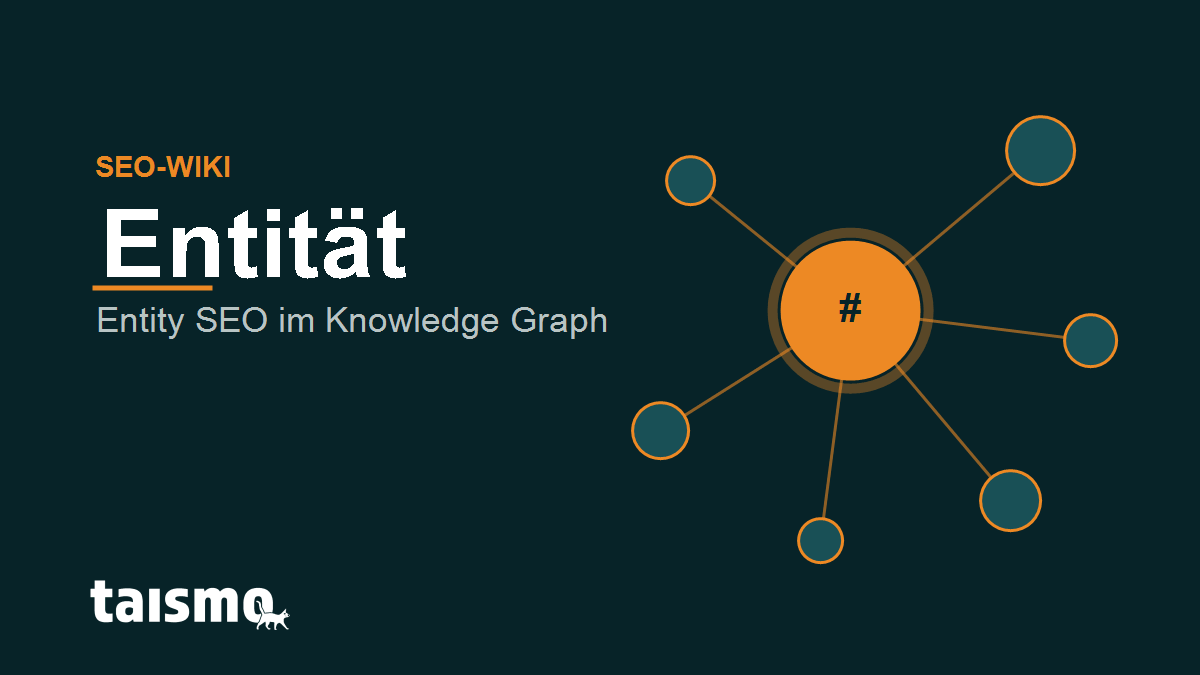
The term originates from philosophy and computer science, where it simply refers to a “thing”—an object with its own identity. Google adopted this principle in 2012 with the Knowledge Graph under the motto “things, not strings.” Since then, the search engine has organized content not just by words, but by the objects and meanings behind them.
Brief Overview of the Term
| Characteristic | Specification |
|---|---|
| Part of speech | Noun, feminine (the entity, plural: the entities) |
| Pronunciation | [ɛntiˈtɛːt], “en-ti-tät” |
| Hyphenation | En·ti·ty |
| Origin | from Late Latin *entitas* (“being, existence”) |
| Field of Study | Semantic SEO, Knowledge Graph, Entity SEO, GEO |
| Related Terms | Knowledge Graph, Named Entity, Structured Data, Ontology, Entity SEO |
What is an entity in search?
In search, an entity is a real or abstract object that Google stores in the Knowledge Graph as a separate node with a unique identifier. Each entity has a machine-readable ID (known as a Machine ID) in the format /m/… or /g/…), which Google uses to clearly distinguish them from other things, regardless of what a user calls them.
An entity consists of three components: a type (person, place, organization, product), a set of properties (attributes such as year founded, population, color), and relationships to other entities. The city of Munich, for example, is a “place” entity with the property “approximately 1.5 million residents” and the relationship “is located in → Bavaria.” It is precisely this structure that makes an entity understandable to a machine.
The difference from traditional web search is fundamental. In the past, Google counted words and their frequency. Today, Google recognizes the concept behind the word, links it to everything it knows about that concept, and provides knowledge boxes, knowledge panels, and answers in the SERPs.
How does Google recognize entities?
Google identifies entities through natural language processing, primarily Named Entity Recognition (NER). In this process, an algorithm parses a text, identifies proper nouns and technical terms, and maps them to a known entity in the Knowledge Graph. Four signals are particularly important in this process:
- Named Entity Recognition: Google identifies names of people, places, brands, and concepts in running text and determines their meaning based on context.
- Co-occurrence: If two entities appear together in many trustworthy sources, Google infers a relationship between them. If a brand is consistently mentioned alongside a service, Google links the two.
- Structured Data: Properly formatted JSON-LD data directly tells Google which entity a page describes. The term " structured data" explains this in more detail.
- Sources of Knowledge: Google cross-references entities with open databases such as Wikidata, Wikipedia, and Google My Business, and incorporates facts verified in those sources.
The attribute sameAs Structured data plays a key role here. It links the entity itself to its entries on Wikidata, LinkedIn, or in business directories, thereby confirming to Google that they refer to the same thing. The more consistent evidence there is, the more confident Google is in its identification.
Entity vs. Keyword: What's the Difference?
A keyword is a string of characters that a user types in; an entity is the unique concept behind it. The keyword “Golf” is ambiguous—it can refer to the car, the sport, or a body of water. An entity, on the other hand, is always unique: the VW Golf, the game of golf, and the Persian Gulf are three different entities, each with its own ID.
This unambiguity solves the biggest problem with pure keyword optimization: ambiguity. Google no longer has to guess which meaning is intended; instead, it recognizes it from the context of the surrounding entities. If “Golf” appears next to “PS,” “transmission,” and “trunk,” the “car” entity is meant.
In practice, this means that keywords and entities are not mutually exclusive; they complement each other. The keyword remains the trigger for the search, while the entity is the meaning that Google provides. Those who merely count keywords are optimizing at a superficial level; those who clearly name and categorize entities are addressing the user’s intent.
Why are entities important for SEO and GEO?
Entities are important for SEO and GEO because both Google and AI systems construct their responses based on entities and their relationships, not on individual words. Entities that are clearly defined and anchored in these knowledge networks are cited more frequently as sources, both in traditional search results and in AI responses.
Three developments make entities a key SEO lever:
- AI Answers and AI Overviews: Large language models and the AI overviews in Google Search primarily draw on facts that are verified as distinct entities. This approach is at the core of Generative Engine Optimization (GEO).
- Voice Search and Semantic Understanding: Spoken queries are longer and more context-rich. Google answers them using entities and their attributes, not through exact word matching.
- Trust and Authority: A brand that exists as its own entity with consistent facts sends strong E-E-A-T signals. Google associates experience, expertise, and trustworthiness with the entity, not with a single URL.
In short: Rankings are increasingly determined where Google has clearly understood a brand, a topic, and their interrelationships as a single entity. Visibility in AI search follows the same logic.
How do you optimize for entities?
You optimize for entities by making your core entities unique to search engines and embedding them in a clear topic network. Entity-based SEO follows five steps:
- Name entities consistently: Use the same spelling for brands, services, and core topics throughout, without rotating synonyms. Each fact should be in its own sentence with a clear entity anchor.
- Marking up structured data: Explicitly declare a page's entity using JSON-LD (for example,
Organization,PersonorDefinedTerm) and withsameAslink to Wikidata and profiles. - Build an entity network: Link related topics into clusters. A pillar page summarizes the main topic, while detail pages—such as this glossary entry—link the individual entities together.
- Establishing your own brand as an entity: Listings in trusted sources (Wikidata, industry directories, Google Business Profile) provide the evidence Google needs to create a separate node for your brand.
- Provide context and completeness: Answer all logical follow-up questions about an entity so that Google can fully understand its type, properties, and relationships.
In practice, these steps are interlinked: high-quality content, a precise schema, and a well-thought-out internal linking structure together form the foundation. This is exactly what a technical SEO service focuses on—one that incorporates semantic SEO and AI visibility from the very beginning.
Frequently Asked Questions About Entities
What is the difference between an entity and the Knowledge Graph?
An entity is a single node—that is, a specific thing, such as a person or a place. The Knowledge Graph is the entire network of millions of such entities and the relationships between them.
Does my brand need a Wikipedia entry to be considered an entity?
No. A Wikipedia or Wikidata entry strengthens an entity, but it is not a requirement. Google also creates entities based on structured data, consistent naming conventions, and a well-maintained company profile.
How are entities and structured data related?
Structured data is the most direct way to tell Google about an entity. Using JSON-LD, you declare the type, properties, and sameAs the identity of an entity, so that Google doesn't have to guess.
world of SEO?