


What is Open Graph?
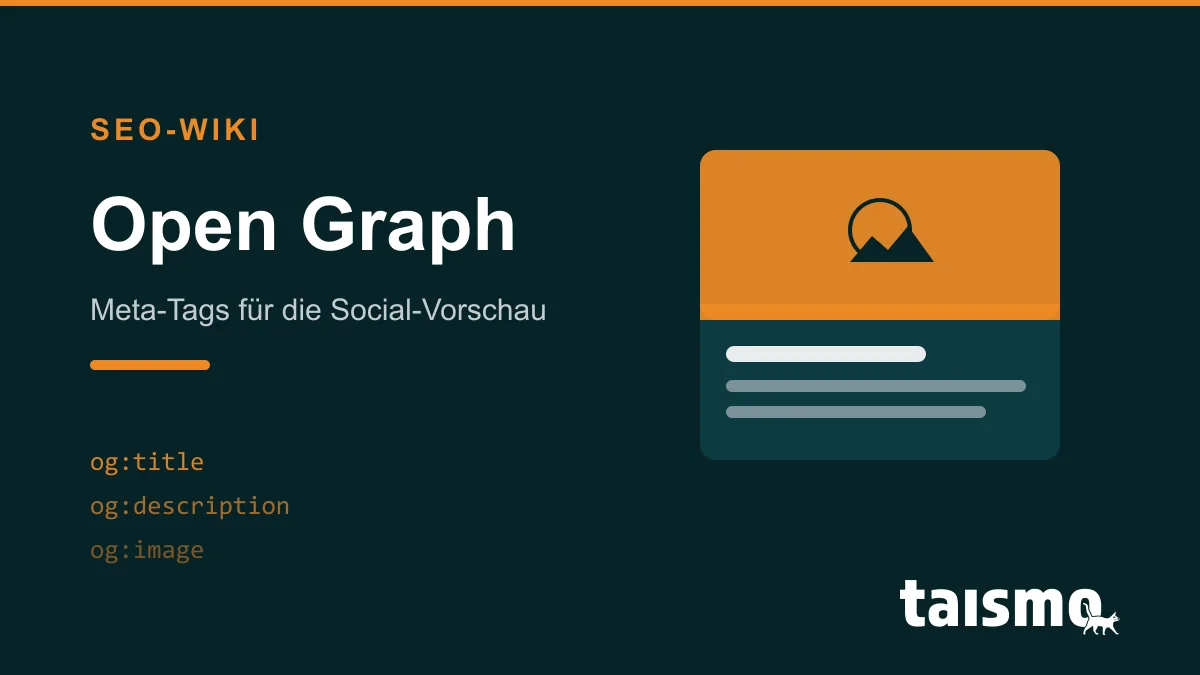
Open Graph is a meta tag standard that defines how a web page is displayed when it is shared on social networks and messengers: which title, which description, and which preview image appear. Facebook introduced the Open Graph Protocol in 2010; today Facebook, LinkedIn, WhatsApp, Slack, and X all read og tags. Without Open Graph, the platform decides on its own what it pulls from the page.
How do Open Graph tags work?
Open Graph tags are placed as <meta> elements in the <head> of a page and use the property attribute with the og: prefix. When someone shares the URL, the platform’s crawler fetches the page and builds the preview card from the tags. A complete basic setup looks like this:
<meta property="og:title" content="What is Open Graph?" />
<meta property="og:description" content="The meta tag standard for social previews." />
<meta property="og:image" content="https://www.example.com/preview-image.webp" />
<meta property="og:url" content="https://www.example.com/open-graph/" />
<meta property="og:type" content="article" />
WordPress websites rarely need to maintain these tags by hand: SEO plugins like Yoast generate them automatically from the title, the excerpt, and the featured image.
Which Open Graph tags are the most important?
5 tags form the core of the standard:
| Tag | Function | Recommendation |
|---|---|---|
og:title |
Headline of the preview card | Up to about 60 characters, may differ from the meta title |
og:description |
Description text below the title | 1 to 2 sentences that spark curiosity |
og:image |
Preview image of the card | 1,200 × 630 pixels, under 1 MB |
og:url |
Canonical URL of the content | Always the main URL without parameters |
og:type |
Content type | website for pages, article for posts |
How does Open Graph differ from the meta title and description?
Open Graph vs. classic meta tags: The meta title and the meta description control the snippet in Google Search, while the og tags control the preview card when a link is shared. Both may be worded differently on purpose: in the SERP, a page competes on search intent and keyword; in the social feed, it competes on curiosity and a strong image. Open Graph is also distinct from structured data based on schema.org: structured data describes content in machine-readable form for search engines and AI systems, og tags format a preview.
Does Open Graph play a role in SEO?
Open Graph is not a direct ranking factor. Its benefit is indirect and comes in 3 ways: appealing preview cards increase the click-through rate of shared links, more clicks on shared links bring visitors and brand contacts, and a well-maintained og:image serves many systems (including messengers and AI chats with link previews) as the thumbnail of the page. Missing or broken og tags therefore show up as a finding in every thorough SEO audit.
Frequently asked questions about Open Graph
Does every page need Open Graph tags?
Every page that can be shared benefits from them; they are not mandatory. If the tags are missing, the networks pick the title, the description, and the image themselves. The result is often a random image and a cut-off text.
What size does the og:image need?
1,200 by 630 pixels has become the standard (1.91:1 aspect ratio). Facebook recommends at least 600 by 315 pixels; many networks show smaller images only as a mini preview next to the text.
What are Twitter Cards?
Twitter Cards are the counterpart to Open Graph from X (formerly Twitter), with their own tags such as twitter:card and twitter:image. If they are missing, X falls back on the existing og tags, so the two standards complement each other.
Welt der SEO lernen?