


What is a grounding page?
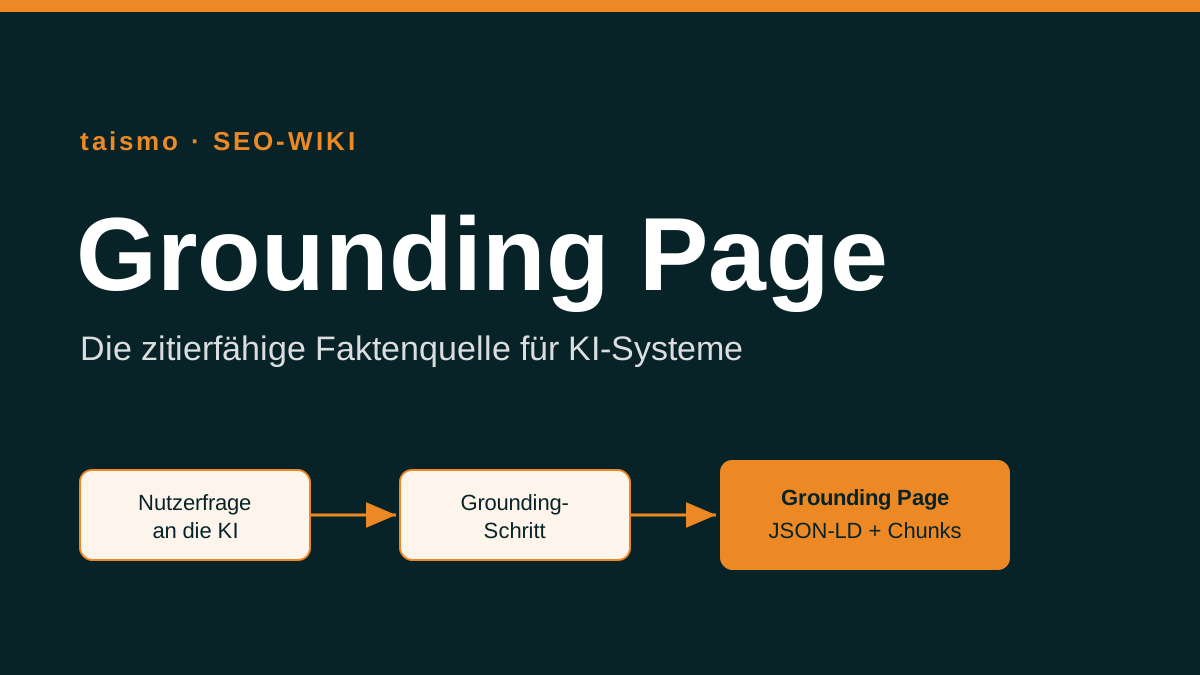
A grounding page is a single, authoritative and machine-readable web page that serves as a citable source of truth for exactly one entity or one topic. AI systems such as ChatGPT, Google Gemini, Perplexity and the Google AI Overviews reach for it during the grounding step, to back their answers with facts they can point to.
What does grounding mean in AI systems?
Grounding is the technical step in which a language model ties its answer to external, verifiable sources. Instead of answering from its training knowledge alone, the system retrieves current passages of text during the grounding step and uses them as evidence. One point is decisive: the AI is not looking for a link to click, it is looking for a passage of text (a chunk) that it can take straight into its answer. Three factors carry the most weight: semantic fit, information density and factual accuracy.
How does a grounding page differ from a classic SEO page?
A classic SEO page is optimized for click probability and rankings. A grounding page is optimized for citability. Both work with the same content, but they judge it by different criteria:
| Feature | Classic SEO page | Grounding page |
|---|---|---|
| Goal | click and ranking | citation in the AI answer |
| Judged by | relevance and authority for the click | semantic fit, information density, factual accuracy |
| Unit | the whole page or URL | the single passage of text (chunk) |
| Success | position in the search results | mention as a source in ChatGPT, Gemini, Perplexity |
A grounding page is therefore the machine-readable evolution of the classic “about us” or definition page: built consistently for entity clarity that machines can read.
What makes a good grounding page?
A grounding page meets five requirements:
- One topic, one entity: the page covers exactly one term, one brand or one person, with no mixture of topics.
- Self-contained, citable chunks: every paragraph answers one question in full and without the context of the rest, following the definition pattern “X is …”.
- Machine-readable structure: structured data in JSON-LD (for example
DefinedTerm) makes the entity and its facts explicit. - Factual accuracy and freshness: concrete numbers, dates and a visible update date instead of vague statements.
- Consistency across sources: the name, the facts and the details match on every platform, connected through
sameAs. That pays straight into E-E-A-T.
How do you build a grounding page?
Building one follows five steps:
- Step 1: define the entity and put the core fact into one single sentence.
- Step 2: answer the logical follow-up questions in sections of their own, each one a self-contained chunk.
- Step 3: add structured data:
DefinedTermfor terms,Organizationfor companies. - Step 4: mirror the facts consistently on external platforms and connect them through
sameAs. - Step 5: keep it current: update the date and the numbers on a regular basis.
Grounding page and GEO: how do they connect?
Grounding pages are one building block of Generative Engine Optimization (GEO). GEO steers how entities, sources and meanings are picked up in AI answers. The grounding page delivers the citable base of facts for that, while GEO organizes how those facts spread and connect across many sources. Anyone who wants to be visible in ChatGPT, Gemini or Perplexity needs both: clean grounding pages and a consistent entity structure around them. That is the work behind our GEO services, and semantic SEO provides the editorial groundwork for it.
Frequently asked questions about grounding pages
Does every website need a grounding page?
Not every single page, but every important entity. For your brand, your core service and your central technical terms, one grounding page each is worth it, so that AI systems can assign and cite these entities without ambiguity.
Is a grounding page the same as a landing page?
No. A landing page aims at conversion and clicks, a grounding page aims at citability in AI systems. Both can exist side by side and follow different goals.
Which structured data belongs on a grounding page?
Depending on the type, DefinedTerm (term), Organization (brand) or Article, always with explicit, machine-readable facts and consistent sameAs connections.
Welt der SEO lernen?